
Building a Sustainable Future for Children: Clean Water · Healthy Living · Happy Growth
A Parent-Friendly Guide to Sustainable Development for Children
Welcome to our learning space on sustainable development for children!
This page is designed for young parents, offering practical, simple, and science-based resources to help you introduce sustainable living ideas in your daily life with your child.
We believe:
“Sustainable development begins at home. A child’s future is shaped by the small habits they build today.”
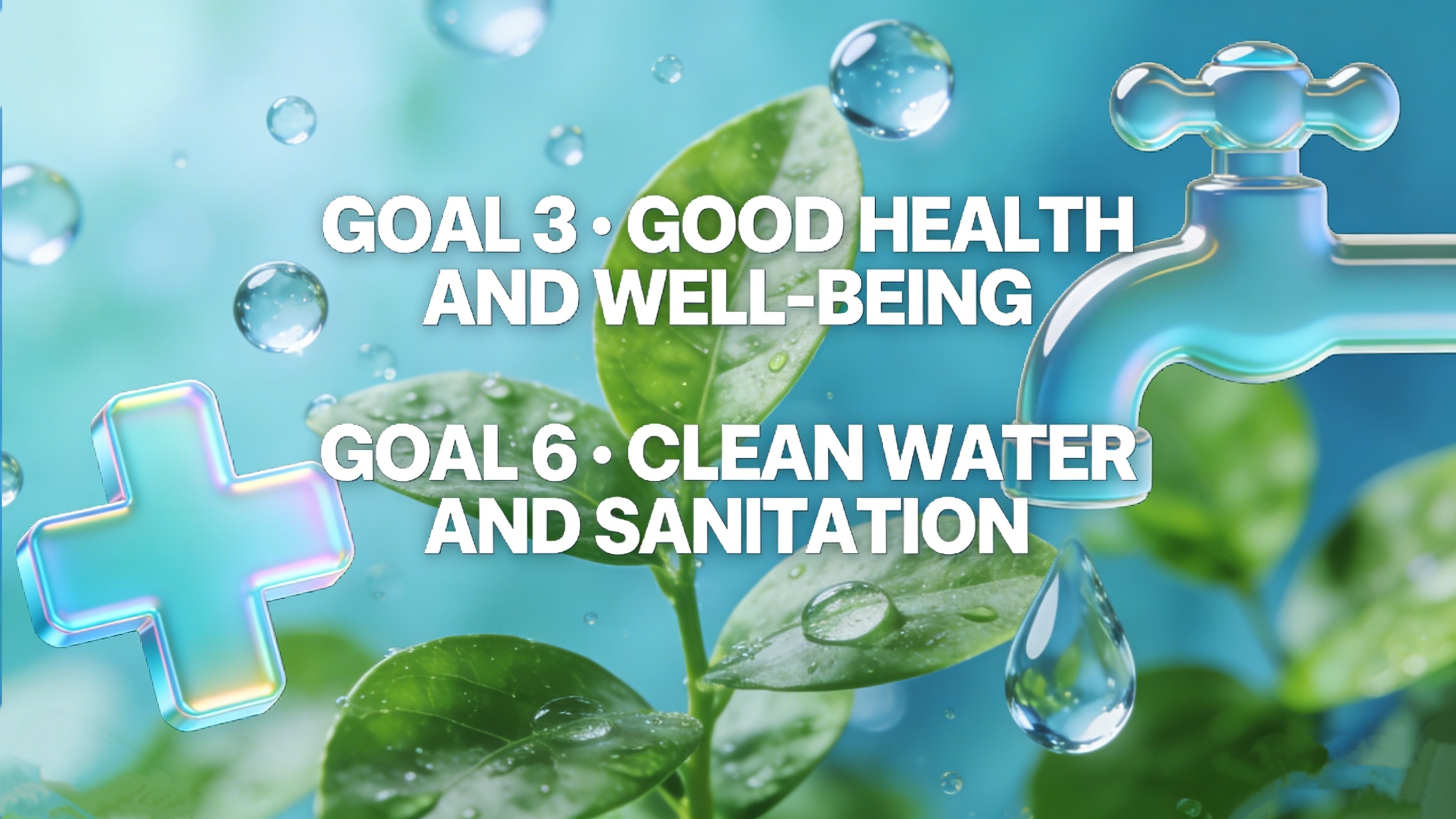
This page focuses on two Sustainable Development Goals closely connected to children’s wellbeing:
Clean Water & Sanitation
Good Health & Well-Being
Part 1: Clean Water & Sanitation
Why is this important for children?
Water is essential for children’s daily life—drinking, washing hands, bathing, and using the bathroom.
Yet less than 1% of Earth’s water is suitable for drinking.
This means that saving water and developing healthy hygiene habits are key lessons for young children.
We want children to understand:
“Having clean water is precious. Every one of us can help protect it.”
How to explain this to children (simple version)
Use clear, relatable language like:
- “Most of the water on Earth can’t be drunk. We need to protect the small part that we can use.”
- “Washing hands is important because tiny germs can make us sick.”
- “Saving water means helping the Earth and the animals who need water to live.”
Children don’t need scientific details yet—they need concrete connections to their lives.
Parent–Child Activities: Understanding Water (Ages 3–12)
1. Dripping Tap Experiment (Make waste visible)
Ages: 5–10
Goal: Show children that even small amounts add up.
Steps:
- Adjust a tap so it drips slowly.
- Place a cup underneath for one minute.
- Measure the water using a measuring cup.
- Calculate with your child: “How much in an hour? A whole day?”
Outcome: A direct understanding of water waste.
2. Little Water Guardian Challenge
Ages: 3–7
Create a “Water Guardian Task Card” and let your child earn star stickers for:
- Turning off water while soaping hands
- Turning off water while brushing teeth
- Keeping showers under 10 minutes
- Using collected rainwater to water plants
Outcome: Builds habits through fun and positive reinforcement.
3. DIY Mini Water Cycle Experiment
Ages: 6–12
Materials: a zip-lock bag, water, blue food coloring, sunlight
Steps:
- Add colored water to the bag
- Seal it and stick it on a sunny window
- Observe evaporation and condensation
Outcome: A simple visual model of Earth’s water cycle and why water is precious.
Easy Daily Changes for Parents
- Use reusable water bottles for kids
- Install water-saving shower heads
- Reuse water (e.g., washing rice/vegetables) for plants
- Teach children to turn off the tap
These small actions strengthen children’s awareness of sustainable living.
Part 2: Good Health & Well-Being
What does “good health” mean?
Health is more than “not getting sick.”
From a sustainable development perspective, health includes:
- Physical strength
- Emotional wellbeing
- Mental safety
- Good sleep
- Social relationships
- Positive attitudes toward life
We hope children understand:
“Health means a comfortable body, a happy heart, good sleep, and warm connections with others.”
How to explain ‘health’ to children
Use simple ideas like:
- “Eating colorful foods makes your body strong.”
- “Exercise makes your heart beat faster and keeps your body happy.”
- “It’s important to tell us when you feel sad, angry, or scared.”
- “Good sleep is like charging your body’s battery.”
Children learn health mainly through imitation—not lectures.
Parent–Child Activities for Healthy Living
1. Rainbow Plate (Healthy Eating Game)
Ages: 3–10
Steps:
- Sort fruits and vegetables by color
- Encourage your child to eat at least 5 colors a day
Outcome: Builds understanding of balanced nutrition.
2. Family Movement Time (Exercise as Joy)
All ages
Spend 10–15 minutes a day doing activities together:
- Dancing
- Family yoga
- Simple obstacle courses
- Walking outdoors
Outcome: Children learn that exercise is fun, not a chore.
3. Emotion Cards: Teaching Emotional Expression
Ages: 3–12
Create four cards with facial expressions:
Happy
Angry
Sad
Scared
Ask daily: “Which emotion were you today?”
Outcome: Helps children recognize feelings and communicate emotional needs.
Healthy Sleep: The Foundation of Well-being
To build nighttime routines:
- Create a bedtime pattern (bath → story → lights off)
- Reduce screen time an hour before bed
- Limit stimulating play before bedtime
- Provide comfort (night light, bedtime hug)
Good sleep improves learning, mood stability, and immunity.
Conclusion: Building a Sustainable Future, Starting at Home
Sustainable development is not only a global topic—it is part of everyday family life.
Through water-saving habits, balanced eating, joyful movement, emotional expression, and healthy sleep, we help children grow into individuals who care for themselves, others, and the planet.
Every small change you make will shape the future world your child inherits.